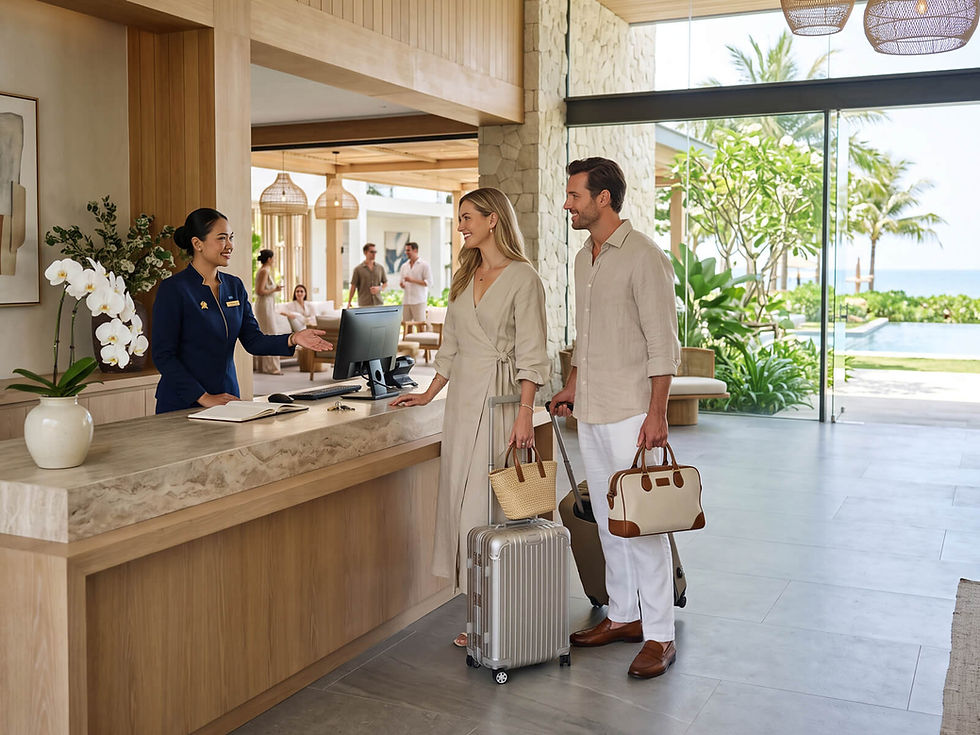
The five senses of success: Why sensory hotel design offers you a strategic edge

Today’s travellers have seemingly endless accommodation options and ever-shrinking attention spans.
When every hotel seems to be promising ‘luxury’, guests zone out. They don’t just want a comfy bed, they want an experience. They want to feel that stress-relieving sigh when they arrive and feel cosseted by their environment.
To secure brand loyalty and justify your premium rates, it’s not about logic, it’s about appealing to guests’ limbic system, the complex system of nerves that controls emotions.
By strategically appealing to guests’ five senses, you’re crafting a sensory signature - a unique hotel brand identity that makes your brand instantly recognisable and emotionally resonant. And it’s about offering brand consistency across the experience.
Hotel brand design that embraces the senses

Functional excellence – a spotless room, great service and reliable WiFi – is the bare minimum. The true differentiator for travel brands is multi-sensory hotel brand design.
This moves the dial beyond visual aesthetics to deliberately engage all five senses, bypassing logic to connect directly to emotion and memory.
When all five senses are engaged, you can create a truly immersive experience for your guests. This shifts brand-guest interaction from a merely transactional one to an emotional, multi-layered experience; one that cultivates the kind of brand loyalty that can seem difficult to attain.
Peregryn Agency uses the concept of this multi-sensory immersion as inspiration for its marketing, creating premium travel content that reflects the rich, authentic experience that engages modern travellers.
Sight and sound as first impressions

The first moments a guest steps into a hotel are critical. Visual aesthetics and soundscapes create the foundational impression.
A sight for sore eyes
Immediately establish your hotel brand identity by engaging your guests' visual senses. Consider architecture and lighting, pairing complementary or contrasting styles to set the mood.
For example, warm, inviting lighting in your lobby evokes calm and comfort, while bright, functional lighting in workspaces and meeting areas promotes focus. EDITION Hotels masters this mood, with minimalist lobbies that feel more like exclusive, carefully lit art galleries, instantly elevating the sense of luxury.
W Hotels is another pioneer when it comes to visual branding. The leading brand was one of the first to create a lounge-style design in favour of traditional lobbies. It has also just undergone a sophisticated makeover, rebranded to reflect shifting standards of luxury, moving towards “clean maximalism” and integrating the destination into the heart and soul of each hotel's design.
Use lighting to create depth and a changing dynamic throughout your spaces, playing with light levels and tones to set a mood that engages, stimulates and relaxes your guests.
An auditory identity
Modern hotels now have the ability to craft soundscapes. With curated music based on the time of day, season and specific area of the hotel, guests feel more immersed in the hotel experience than ever before.
Once again, W Hotels, leads the way with how the brand treats music as an essential amenity, with resident DJs and bespoke playlists that align with their vibrant hotel brand identity.
Hard Rock Hotels is another excellent example – a brand that incorporates its music heritage throughout the entire guest experience. Then there’s Ushuaïa in Ibiza, which has a resident DJ performing in the lobby, immersing you in the brand the moment you set foot in the hotel.
The aural experience in a hotel extends beyond main event entertainment like DJs to encompass every touchpoint, from the music played in the elevators to the general atmosphere, shaping the guest's holistic perception.
Being keenly aware of acoustics is essential for shaping the guest experience. Move beyond simple soundproofing and actively design acoustics tailored to the function and desired ambiance of different spaces.
Leveraging scent and tactile experiences

Travel brands often underestimate the power of smell and touch in hospitality. From signature scents and luxurious textures to tactile design elements, here’s how to create a deeper, more immersive sense of place and comfort for your guests.
Scents and sensibility
Sensory mismatching can undo all your investment in creating an experience. Imagine a foyer with a biophilic plant wall, but a smell of chemical cleaning agents. It breaks the magic.
A signature scent is a powerful tool for your hotel brand identity, creating instant, deep brand recognition and recall. Developing a specific, subtle fragrance that guests associate only with your brand is a shortcut to comfort and familiarity the moment they return.
Scent marketing can create a direct link between our sense of smell and the brain's limbic system, influencing mood, boost brand recall and drive sales. Scientifically, pleasant aromas are shown to improve mood and reduce stress while making experiences more memorable. For hotel brands, scent marketing is a power tool.
Using scents can also evoke a sense of luxury, with high-end spa products in bathrooms or a custom scent diffused in the air. Westin Hotels has mastered the art of signature scents. The brand’s White Tea scent is designed to be clean, calming and restorative. The brand even sells their scents, allowing guests to extend the brand experience within their own homes.
The Rosewood Carlyle Hotel in Manhattan, New York, has even created its own perfume, which evokes its glamorous history with the hotel’s signature scent of honeysuckle. Ultra-luxe hotel brand One&Only conjures up signature scents that capture the magic of each of its hotel’s surroundings. Its Maldivian resort, Reethi Rah, sells guests a perfume that blends sweet grapefruit with notes of amber and cedarwood, and a hint of coconut.
Remember, it’s not just about creating a nice perfume. Today’s brands are using functional fragrances, such as cedar wood to reduce cortisol levels, and lavender or chamomile to create soothing recovery and relaxation areas. It taps right into the focus on wellbeing that underscores modern luxury.
A touch of class
Material selection is a key part of the brand experience. Consider organic, sustainable materials, or antique furnishings and luxurious linens and robes that convey opulence. Your hotel brand identity should be expressed in everything that the guest touches. Also, make the guest feel physically cared for by personalised service, such as the daily ironing service or complimentary premium minibar items.
In cold climates, layering textures and textiles is an important design element that transforms a hotel space from merely functional to a sanctuary of warmth and comfort. This multi-sensory approach often starts with foundational tactile elements, such as rich, dark wood finishes or stone floors softened by thick, hand-knotted wool or faux fur rugs that invite guests to sink their feet in.
In Chile, Tierra Hotels uses native woods, alpaca wool textures and textiles that reflect the unique Patagonian and Atacama landscapes.
Four Seasons Hotels is known for the meticulous quality and weight of its linens and towels, while the comfort of its signature mattresses gives the guest a close association between the brand and a good night’s rest. This is just one of the many hotel brands that has invested heavily in the sleep experience, even offering their own pillow menu. This showcases a new level of personalized care for guests.
Crafting unforgettable culinary journeys

Taste has a pivotal role in the modern guest experience. The best hotel brands are offering innovative culinary concepts, locally sourced ingredients and memorable gastronomic experiences, transforming dining from a necessity into a brand immersion and a rich source of storytelling.
The most successful concepts go beyond standard fare by offering rich theatrical dining experiences. High-concept, multi-sensory experiences, such as IHG’s Regent Taste Studio, exemplify this with a rotating, immersive dining concept, where menus are paired with exquisitely designed sound, lighting and digital art for a truly curated experience.
Element 47, at The Little Nell, in Aspen, Colorado, and HMF at the Breakers in Palm Beach, Florida, offer incredible wine lists from their renowned cellars, attracting wine lovers from all over the world.
Blackberry Farm in Tennessee features a 4,200-acre estate with its own farm, cheesemaker, forager, and butcher, offering farmstead tours and chef-led cooking demos.
Meanwhile, in Norway, Storfjord Hotel arranges fjord farm visits for hunting, fishing, growing, and baking experiences, as well as private dining experiences.
Hotels can also foster a deeper sense of place and genuine connection by crafting culinary experiences linked to the local community and environment. Using locally sourced ingredients and offering regional specialities helps forge an emotional connection with the destination, grounding the hotel’s offering in authenticity.
Translating senses for the screen

You’ve invested in creating a sensory experience at your hotel, so how do you translate that to digital touchpoints? While you can’t share scent and texture through a screen, you can use sensory proxies. These help guests imagine being there and can trigger an equally emotional response.
For example, if you're shooting video for your website and socials, don’t just show a room with a bed. Capture the slow, cinematic crunch of fresh sheets. Show the steam rising from a locally roasted espresso so people feel like they can almost smell it.
The same with sound. Can you set social posts to a background of distant waves or highlight the birdsong in your serene garden area?
You can create a sensory experience with words, too. Forget generic adjectives such as ‘luxurious’ or ‘comfortable’. Focus on describing the cool touch of Aegean stone underfoot or the morning scent of sun-baked pine. They invite the reader to imagine themselves there. Then when they arrive, the experience is an extension of that initial interaction they had with your brand.
Your sensory checklist

Here are some questions you can ask yourself when designing the different elements of your hotel and your online experience:
Does your lighting choreography intuitively shift from productivity at 10am to intimacy at 7am?
Does your Instagram feed use the same colour palette and mood as your physical lobby?
Is your music generic, or is it a genuine reflection of your brand voice?w
Have you designed 'sonic sanctuaries' where guests can enjoy absolute silence and differentiate from social spaces?
Are you using scents for wellness rather than just perfume?
What is the first thing a guest touches? Is it a plastic key card or a textured material that signals premium quality?
Does your website use high-res texture photography to imply the tactile quality of your rooms?
Does your welcome treat tell a story about the local soil, or is it a generic, branded chocolate?
Can guests take a piece of their destination home with them, such as a local olive oil or spice blend?
How immersion drives loyalty and word-of-mouth

The power of a multi-sensory hotel strategy lies in the capacity to transcend a simple stay into an immersive experience where deep, emotional connections are forged.
By curating every element – sight, sound, scent, taste, and touch – hotel brands can create a truly unique and memorable hotel brand identity.
This sensory signature becomes intrinsically linked to every positive memory the guest experiences during their stay. Emotional connections are formed, resulting in valuable brand advocacy, authentic user-generated content, repeat business, and powerful word-of-mouth recommendations.
Ready to hone your unique sensory signature? Peregryn Agency specialises in translating your high-concept, five-sense physical experience into compelling, high-converting digital content that captures the attention and desire of the next generation of travellers.