Why Chile is the global blueprint for a new form of regenerative luxury tourism

In the world of travel, luxury is often about what you can add in. In Chile, true luxury is about restraint, the art of leaving things untouched.
I spent two years living in Chile, writing for the UK media from the edge of the world. As I travelled the length of the ribbon-like country, I began to realise that luxury is done differently in the Southern Hemisphere. It’s quiet. Simple. It strips everything back until only the essentials remain.
Because when the scenery is as majestic as Atacama’s arid colours and the ice-carved landscapes of Patagonia, the ultimate service a brand can provide is to immerse guests in the wilderness and then get out of the way.
I was recently reminded of this while contributing to a piece for The Times, alongside adventurer Levison Wood. While Levison explored the otherworldly stillness of the Atacama as he broke his journey travelling the length of South America, I summed up the next evolution of Chile’s travel scene.
Researching was a refreshing reminder that beyond the greenwashing that can be so prevalent in the travel industry, there are businesses and organisations that take their role as stewards of the land with profound seriousness.
They are the very example of teaching through showing. They work to actively heal the landscape they inhabit and invite guests to become part of the story, empowering them to go home as ambassadors for the fragile ecosystems they have explored.
The evolution of the wilderness stay

For decades, brands like Explora have set the standard for high-end exploration. Its latest move goes a step further. This December, Explora Torres del Paine Conservation Reserve joins the collection.
What makes this innovative isn't just the lodge itself, but the fact that it sits within its own 15,000-acre protected wilderness reserve. With just 10 rooms overlooking the famous granite spires, the luxury here is defined by radical intimacy. By owning and managing the reserve, Explora has created a private refuge where guests can spot some of the 140 bird species and 20 mammals - including pumas and guanacos - that call this pristine ecosystem home.
From a B2B perspective, this is the future of vertical integration in hospitality. Explora has moved beyond being a gateway to a National Park; it has become the park’s protector. It invites guests to become part of the story, empowering them to return home as ambassadors for the fragile ecosystems they have explored.
Success of the philanthropic model

Perhaps the most ambitious example of Chile’s commitment is the creation of Cabo Froward, the continent's newest National Park. This wild coastal region is the brainchild of the Tompkins family (of Patagonia clothing fame).
By donating private land to create a public park, they have long pioneered a different model of philanthropy. This wild landscape of subantarctic forests and indigenous Kawesqar history is home to endangered species ranging from huemal deer to pumas.
This is yet another masterclass in purpose-led branding. The modern high-net-worth traveller no longer wants to be a mere spectator to beauty; they want to be part of a conservation success story.
Projects like this, where a solitary lighthouse becomes a natural history museum and the very paths Charles Darwin once trudged into become sites for thoughtful hiking, offer a different type of luxury - the luxury of access to the world’s remotest areas. And that luxury can be a powerful engine for local community support and environmental restoration.
Cultural sustainability and the search for soul
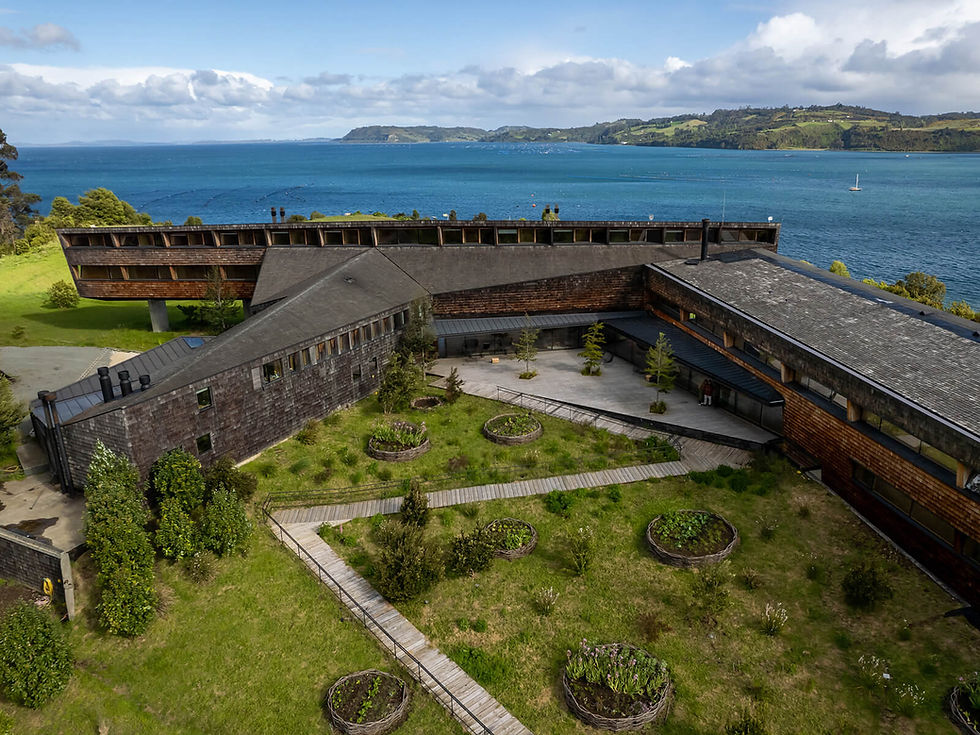
Sustainability is also about the preservation of the human soul of a destination. Just south of Chile’s volcanic Lake District lie the islands of Chiloé, wrapped in myth and famous for their colourful palafito stilt houses.
The American-Chilean Purcell family founded the Tierra Hotels brand, which defined rustic luxury in Chile with hotels ensconced in Patagonia and Atacama. They sold their majority share in Tierra, but recently bought back their beloved Chiloé outpost - Refugia Chiloé.
Here, exploration isn’t just about the emerald isles; it’s about helping preserve a culture that developed in isolation for centuries. From curanto meals cooked in earthen ovens to visiting unique wooden churches built without a single nail, the tourism model here honours local heritage rather than overwriting it.
For a brand, this cultural sustainability offered by a family deeply rooted in the local community offers an experience that no mass-market hotel can cross. Here, the owners and guides know locals by name and can offer access that goes beyond a simple tour. It offers a level of authenticity that is increasingly the rarest currency in travel.
Rareness as the new exclusivity

Even in the arid north, Chile is redefining the wildlife encounter. In Lauca National Park, set on the border with Bolivia, travellers can seek out the Andean mountain cat, a feline so rare it is known as the "ghost of the Andes".
New itineraries from operators like Responsible Travel combine night hikes with conservation-led drives to spot this elusive feline. In an era of curated, guaranteed sightings, the real luxury here is the honesty of the encounter. It respects the animal's terms, offering a raw, unscripted interaction with nature that you simply can’t experience in more developed tourist areas.
Here, the luxury is exploring an area of Chile many have never heard of, going so far beyond the usual sights that you have a chance to interact with nature and communities in a more authentic way.
The new benchmark

Chile may be known as one of the world’s leading adventure destinations, but it’s also gone beyond simple sustainability to pioneer in the art of regenerative luxury.
All these elements come together to show us that when you lead with conservation and respect for heritage, you don’t just attract the right traveller, you create a resilient, relevant brand.
At Peregryn, we believe this model of philanthropic luxury is where the future of the travel industry lies. It’s about bold, visionary projects. A mission that roots your brand and the ability to define and communicate that purpose to a global audience through storytelling.
Chile proves that when you align your brand identity with the preservation of the landscape, you find yourself exactly where the world’s most discerning travellers want to be.


