Hotels, maximalism and the death of beige luxury
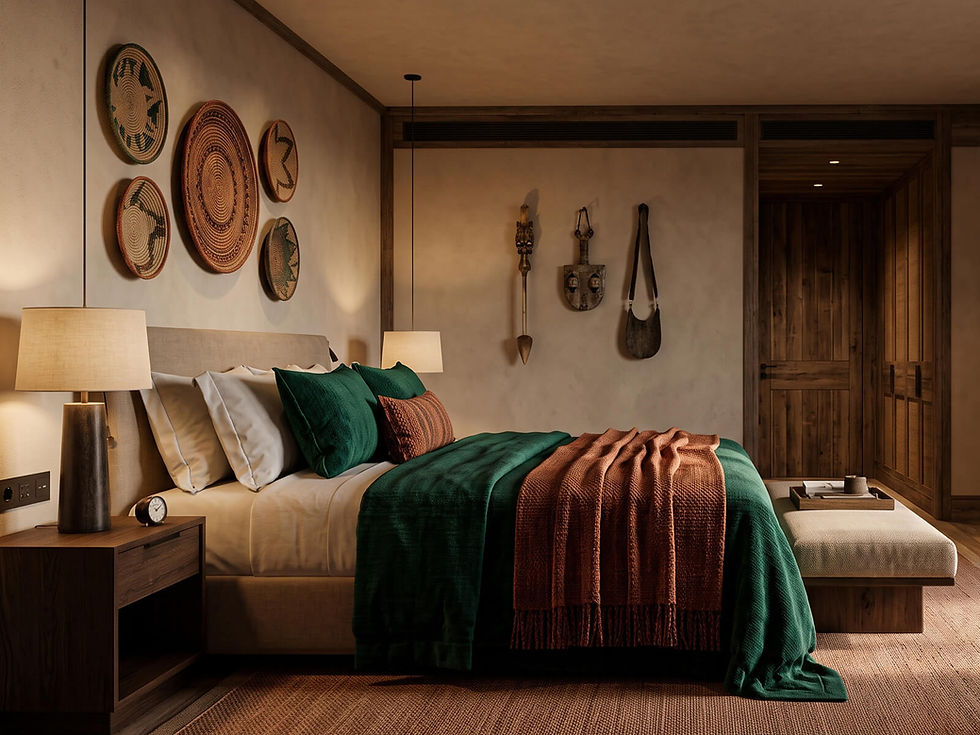
Sometimes, it can feel like five-star luxury has to adhere to a certain set of commandments. A gleaming marble lobby, 800-thread-count Egyptian cotton sheets, impeccable service - tick, tick, tick.
It used to be that this was how you set yourself apart from the rest, but the idea of luxury has evolved.
Now, when you copy-paste premium markers across continents, without any thought for local influences, you’re actually turning your property into a commodity. And as we all know, commodities are always eventually dragged down into the unforgiving arena of price wars.
Today’s travellers are looking for something different. They are actively seeking emotional resonance, authenticity, and a sense of place - those traditional luxe markers are simply the baseline, not the differentiator.
If a guest can wake up in one of your suites and not immediately identify which country, city, or coast they are in, you’ve gone beige. And your hospitality brand strategy is in serious trouble.
Evolving the luxury guest experience

For decades, the traditional luxury play has been to build a wall between the guest and the destination, to insulate them from the outside world, which was perceived as at odds with the luxury offering. But today, the most successful properties have turned that on its head. True luxury has become about access.
Instead of shutting guests away, a signature hotel should act as a welcoming host. You want to open your doors to your location, rather than guard your guests against the world. The goal is to create a sanctuary, not a fortress.
You still want to wrap visitors in effortless relaxation, of course, but you do it by letting your hotel’s unique destination and history breathe through the property. When you allow local textures, natural sounds, and historic architecture to flow organically through the luxury guest journey, you let the destination do the heavy lifting of grounding your guests.
Creating an immersive experience
The industry's most innovative minds are completely abandoning the concept of the walled-off resort. At Peregryn, the most engaging properties we’ve seen recently are both physically and culturally embedded within the local fabric, functioning as active participants in their community rather than isolated islands of wealth. They’re the places that invite travellers to experience the everyday, to engage with the local community, or to immerse themselves in the glorious landscape.
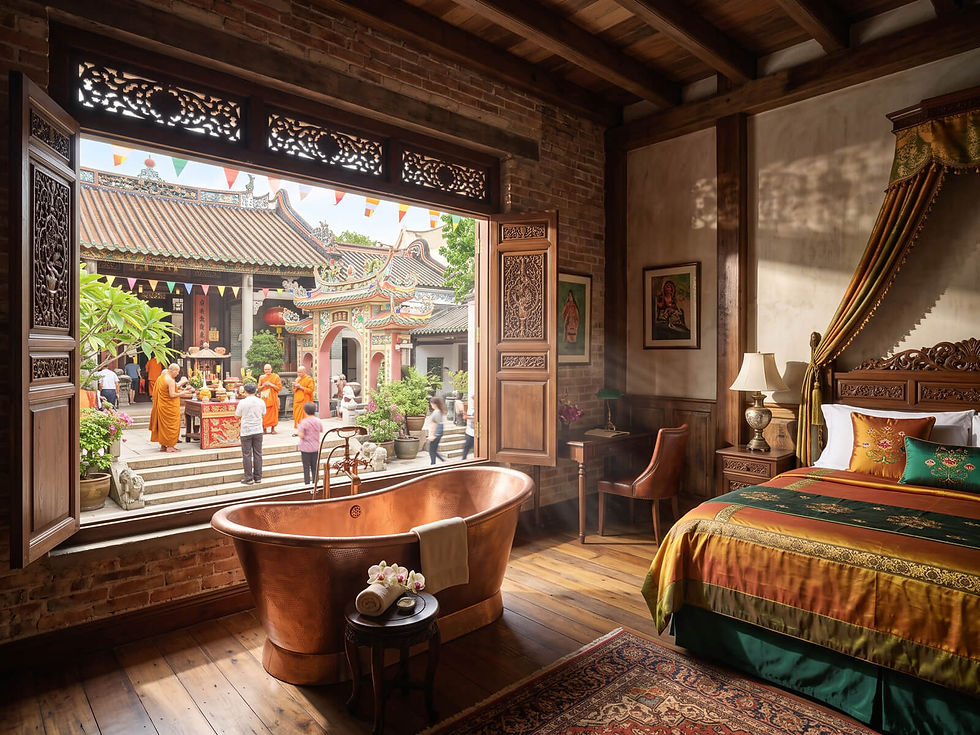
Look at Soori Penang in Malaysia, which opened its doors in early 2026. Rather than clearing land for a generic tower, the property is housed within restored heritage shophouses right inside the historic Khoo Kongsi temple complex. This placement puts guests directly into a living cultural enclave. Centuries-old temple rituals and everyday local life unfold right outside their windows, offering an immediate sense of wonder.
In Madrid, the Nômade Temple Group has just opened its first European destination after two highly successful properties in Mexico’s Yucatán Peninsula. The brand barely mentions the word ‘hotel’, instead focusing on promoting communal spaces and experiences that are deeply rooted in the local environment.
Equally integrated, but in a different way, is M-City in Melbourne. This development completely turbocharges the local neighbourhood concept by blending residential spaces, offices, premium retail, and a luxury hotel into a single, highly curated precinct. The hotel effectively serves as the collective living room for the community, vastly enriching the daily, organic interactions between urban residents and international travellers.
Italy called this philosophy a while back, and has implemented it with astonishing success in the albergo diffuso model. Not only has the programme given hotels a new lens through which to attract guests, it has also given a new lease of life to dying rural villages. By scattering hotel rooms and amenities across existing, historic buildings throughout a single village, this framework provides guests with an unvarnished slice of the charming local life, while directly rescuing and revitalising vulnerable local economies.
The new architectural blueprint: breaking the traditional layout
The predictable formula of the cavernous grand lobby leading down into endless corridors is no longer satisfying to a sophisticated traveller. Instead, contemporary hotel brand design is leaning heavily into layouts that purposefully force guests to interact with the raw landscape or ancient structural heritage.
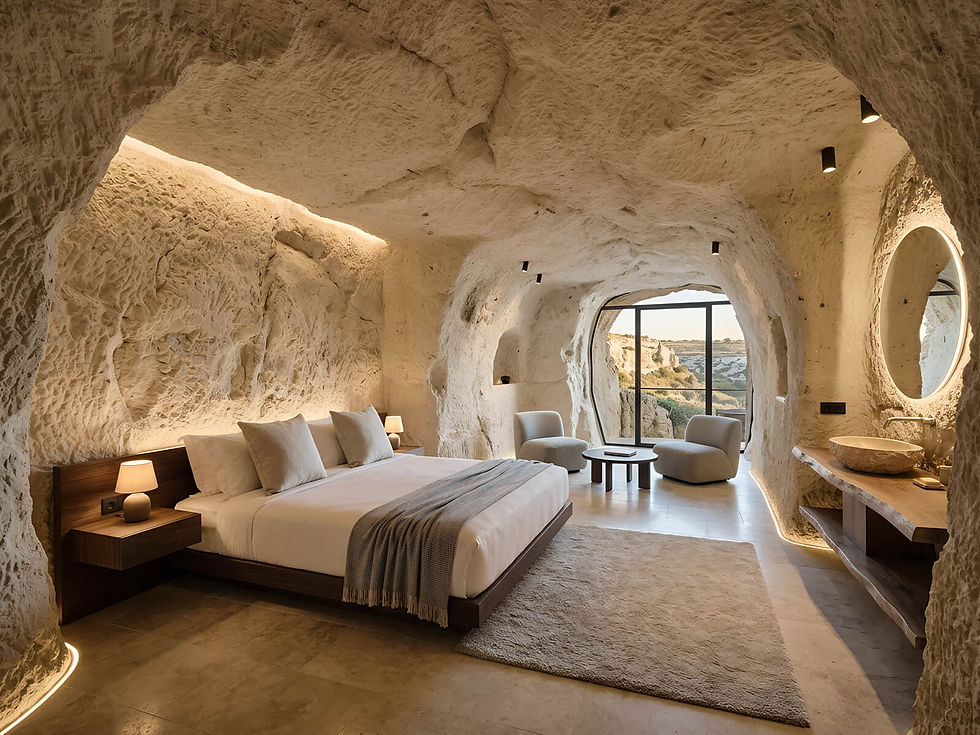
Consider the breathtaking Vetera Matera in Italy. This spectacular Relais & Châteaux property is built into the prehistoric limestone cave dwellings of the UNESCO-listed Sassi. There is no artificial set dressing here; the hotel’s “negative architecture” doesn’t merely mimic the destination—it literally is the destination. An unforgettable experience.
In Sri Lanka, Tri Lanka takes a highly mathematical approach to harmony. The entire property is built following the Fibonacci Sequence, aligning itself with the golden ratio of nature. The result is a progressive resort layout that flows so organically along the lakeside that it doesn't feel as if it is built so much as naturally formed from the landscape.
Even in remote extremes, like the Arctic Bath in Sweden, the focus remains entirely on deep immersion. This floating architectural marvel deliberately integrates guests into the pristine, frozen scenery of the Lule River, enforcing a profound digital and mental detachment from the everyday grind.
Meanwhile, urban environments are executing this blueprint with equal audacity, as seen with Six Senses London, opening in 2026 within the historic Art Deco walls of the former Whiteley department store. Rather than clustering amenities together, the property purposefully scatters its premium features, including a subterranean biohacking lounge, a 20-metre pool, and an exclusive community members’ club, throughout the vast historic architecture. By inviting guests to journey through the building’s beautifully restored heritage spaces to access different facilities, the property becomes an excellent example of destination storytelling.
The ritualistic experience

It’s time to banish the sterile check-in desk to the history books. Standing awkwardly in front of a computer monitor while a receptionist taps away at a keyboard is a transactional interaction that shatters any sense of luxury romance. Progressive hotel brands are starting to replace these touchpoints with an immediate, grounding connection to local heritage.
At the newly opened Alila Mayakoba in Mexico, which welcomed its first guests in early 2026, the traditional reception desk is nonexistent. Instead, the guest journey begins with an intimate, ancient Mayan welcoming ritual where hands are gently cleansed with raw local clay and native honey. It signals instantly that the luxury here is profoundly experiential, not merely performative.
Similarly, the highly anticipated Orient Express Venezia, launching later in 2026, completely bypasses street-level logistics. Guests can arrive via private watercraft, stepping directly from the historic canals into a meticulously restored Neo-Gothic and Baroque Venetian palazzo. By trading the standard lobby desk for a cinematic, water-level arrival, the property instantly roots the traveller within Venice's legendary maritime history.
In Japan, this mastery of arrival is something Aman Tokyo has perfected for years. From the presentation of warm, soothing oshibori towels and the pouring of signature seasonal teas to the deliberate, elevated silence overlooking the sprawling metropolitan skyline, every single sensory detail is considered. The arrival ceases to be an administrative hurdle; it becomes a sacred ritual, making an indelible first impression.
Safe design is the riskiest commercial investment

Attempting to appeal to absolutely everyone is the fastest way to appeal to no one. Contemporary luxe travellers want comfort, yes, but they also want to be challenged. They want to experience the world. And those safe, cookie-cutter aesthetics are not a defensive shield, they are the absolute quickest route to commercial irrelevance. If your property looks exactly like any luxury hotel design in London, New York, Tokyo, Paris, Shanghai, it’s not really authentic luxury anymore.
When your property fails to stand out visually or emotionally, it becomes incredibly easy for consumers to compare you purely on price. You are no longer an aspirational destination; you are a transactional commodity. Without a distinct, magnetic identity to draw guests directly to your website, you are forced to fight for visibility on major online travel agencies. This leaves you trapped in a cycle of discounting, all while OTAs swallow a massive percentage of your revenue.
The solution is to dig a cultural moat, protecting your property by grounding it in authentic local heritage. Perhaps it’s a bold, maximalist design that riffs off local ceramics, natural materials, like stone from a local quarry, or wooden furniture, handmade by local artisans from the ancient woods around your property. Maybe it’s a sleek minimalist design that mimics the austerity of the Buddhist temple next door. Competitors can easily replicate an infinity pool or copy a sleek, beige lounge layout, but they cannot steal a deeply integrated, location-specific narrative concept.
Look at how independent hospitality group The Dean is thriving by aggressively rejecting corporate neutrality in its ambitious 2026 European expansion across Berlin and Munich. It weaves rebellious contemporary design with rich local artwork, placing a high-energy bakery and restaurant at the absolute social core of the property. By creating spaces that hum with local residents from dawn until late, they build an organic barrier that sterile corporate hotels simply cannot touch.
We see this same fearless approach at Villa Palladio in Jaipur, which is deliberately designed to feel like a vibrant, unapologetically country estate steeped in local colour and regal Rajasthani fantasy. The aim is for guests to feel as though they have been transported into a splendid past of grandeur.
Similarly, in Wales, Twr y Felin in St Davids reinterprets the rugged Pembrokeshire landscape. Once a historic Welsh windmill, it has been boldly transformed into Wales’ first contemporary art hotel, greeting arriving guests with striking, large-scale commissioned artworks that blend abstract and realistic styles to celebrate the surrounding national park.
Reclaiming the soul of hospitality

Ultimately, today’s discerning global traveller is walking away from the predictable safety of beige minimalism. They are demanding spaces that enhance their travel experience. They want to feel immersed in the place they visit and entwined in its stories. As a specialist hotel brand consultant, Peregryn sees this story playing out every day, and the winners are the hotels that adapt.
Take an honest, critical look at your current portfolio. Are you building a living, breathing sanctuary that truly reflects the irreplaceable soul of your destination? Or are you simply investing millions to construct an incredibly expensive, beautifully polished waiting room?
The choice is yours, but the market has already made its decision.


